Like many middle and high school students who travel from across the state to attend, Dalila Harris arrived at the Georgia Science and Engineering Fair, held annually in Athens, ready to present her research and see how it measured up. But she found something much bigger than a science fair – she found the launching pad of her higher education journey.
Now a first-year environmental economics and management major at the University of Georgia, Harris has come full circle. As a student employee in the Office of Academic Special Programs at the UGA Center for Continuing Education & Hotel, she works behind the scenes on the very event that once helped shape her future.
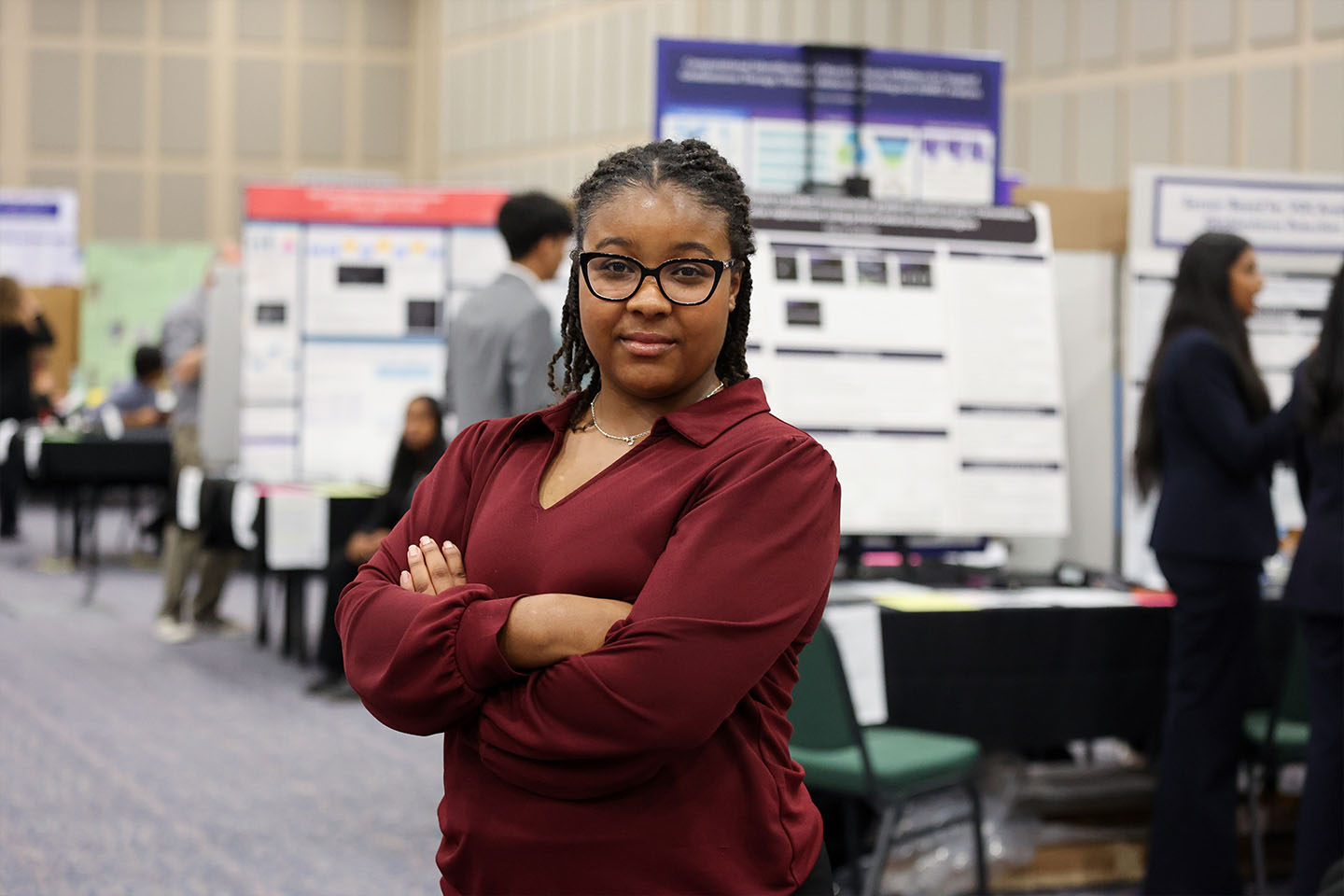
“As I’ve worked here, I can see how much we try to make it a part of other children’s lives,” Harris said. “When you’re participating in GSEF, you have a competitive mindset about the event. Being behind the scenes, I get to see that the point is to give children the opportunity to believe in themselves and have the confidence to present their work to professionals.”
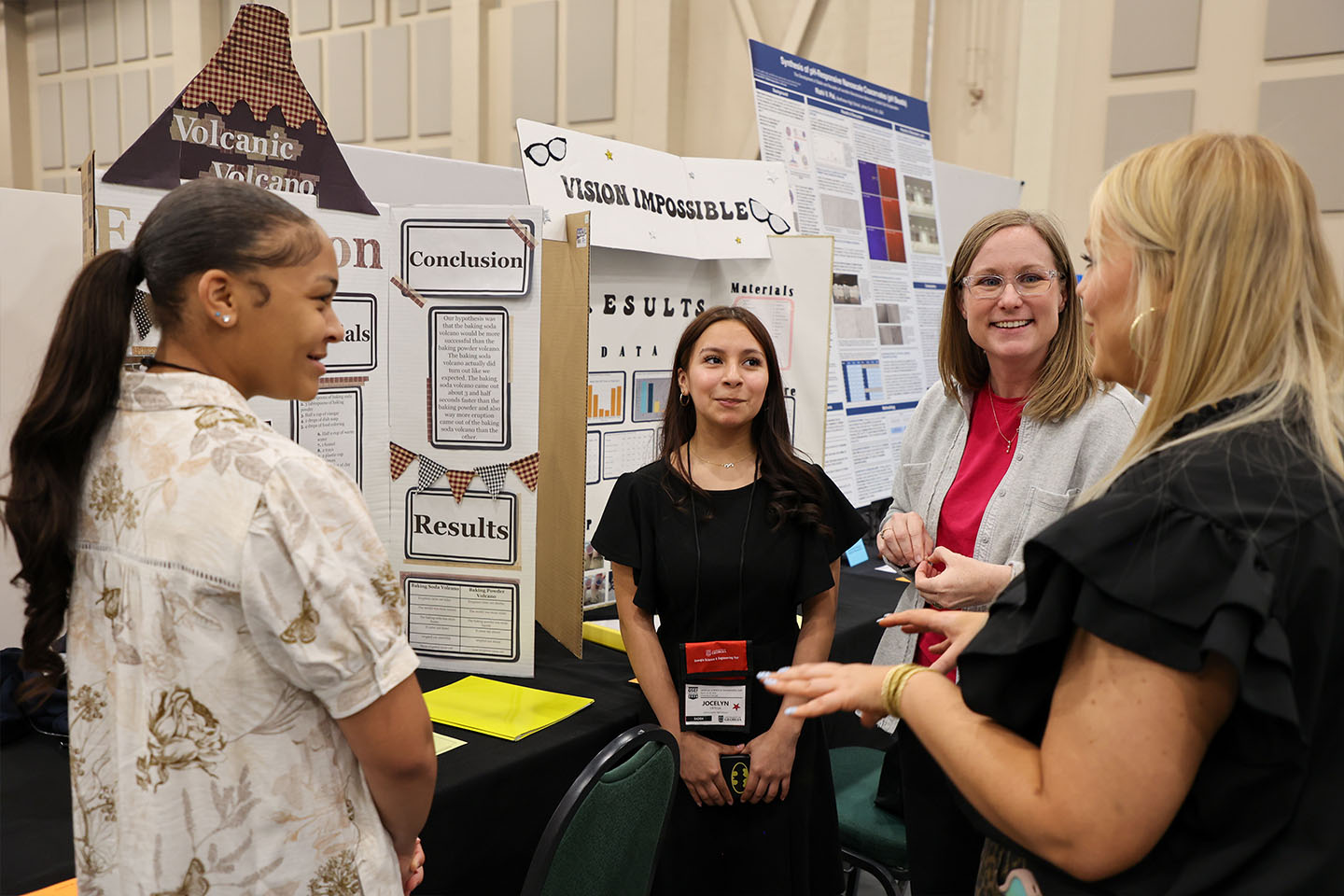
Held each spring in Athens and hosted by the UGA Center for Continuing Education & Hotel, a unit of Public Service and Outreach, GSEF brings together middle and high school students from across Georgia to present original research, receive feedback from STEM professionals and compete for awards.
Top-performing students earn the opportunity to advance to national and international competitions, including the Regeneron International Science and Engineering Fair, one of the world’s largest pre-college STEM competitions held in May.
Beyond the presentations and prizes, the event reflects UGA’s broader mission: expanding access to opportunity and inspiring the next generation of innovators.
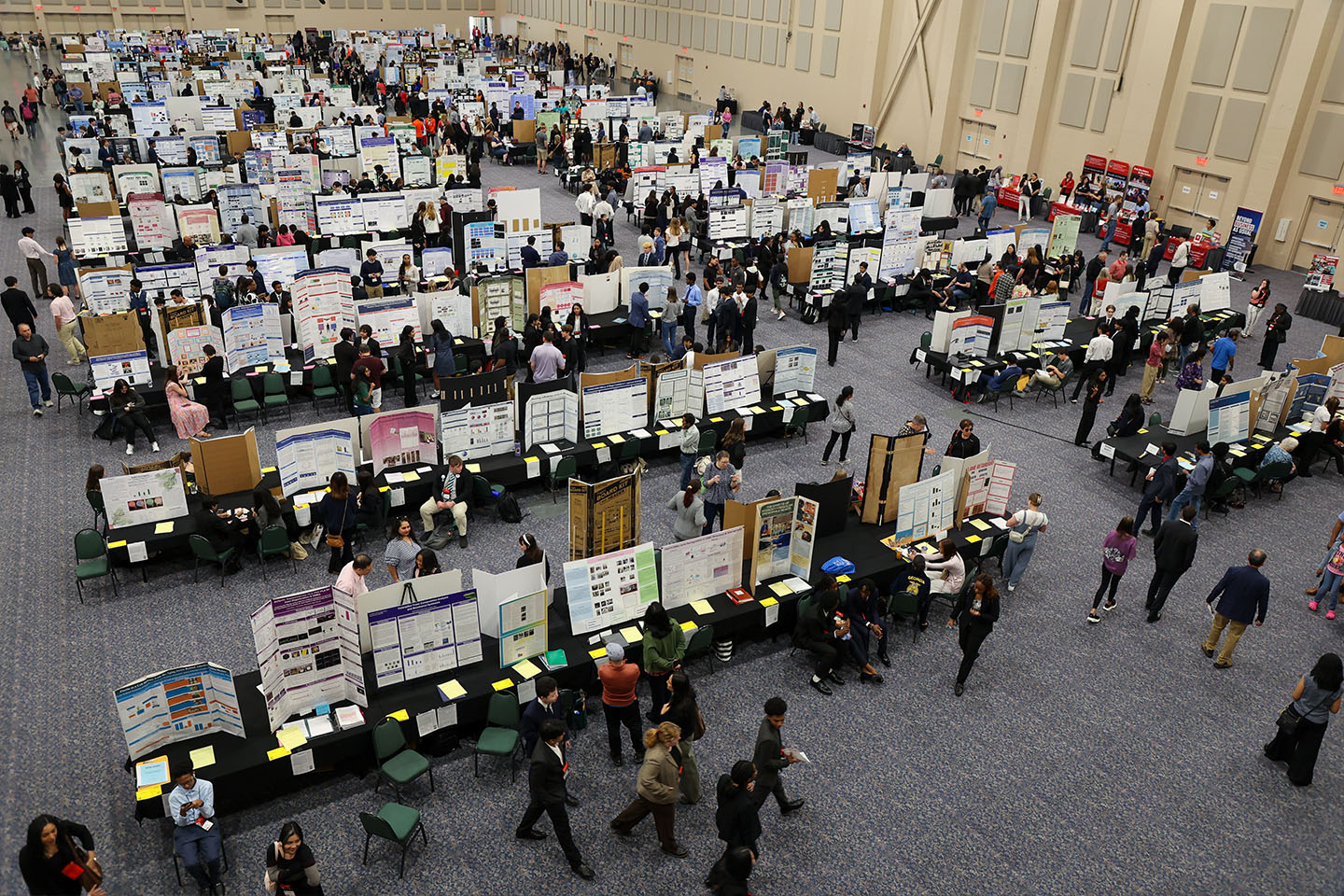
Harris’ journey began with a project focused on a global challenge. Her project focused heavily on water purification, particularly in response to the global lack of access to clean municipal drinking water. She conducted research on clean water policies, inequalities in access to safe drinking water around the world and the availability of solutions that could address these challenges.
Harris earned three awards at GSEF for her work, including the “GSEF First Honors Award,” the “Biophysical Society Award,” and the “Senior Division Best in Category Award for Biochemistry.”
“This experience ultimately set me on the path toward pursuing a career in environmental policy,” she said.
Opening doors across Georgia
For students from rural communities, the opportunity to attend GSEF can be transformative.
Mandy Fulton, a high school science teacher from Clinch County, regularly encourages her students to participate in GSEF not just for the competition, but for the exposure. She’s been bringing her students to the fair for the past five years.
“We’re in an extremely rural area,” Fulton said. “I love that GSEF is an even playing field for all students from all walks of life.”
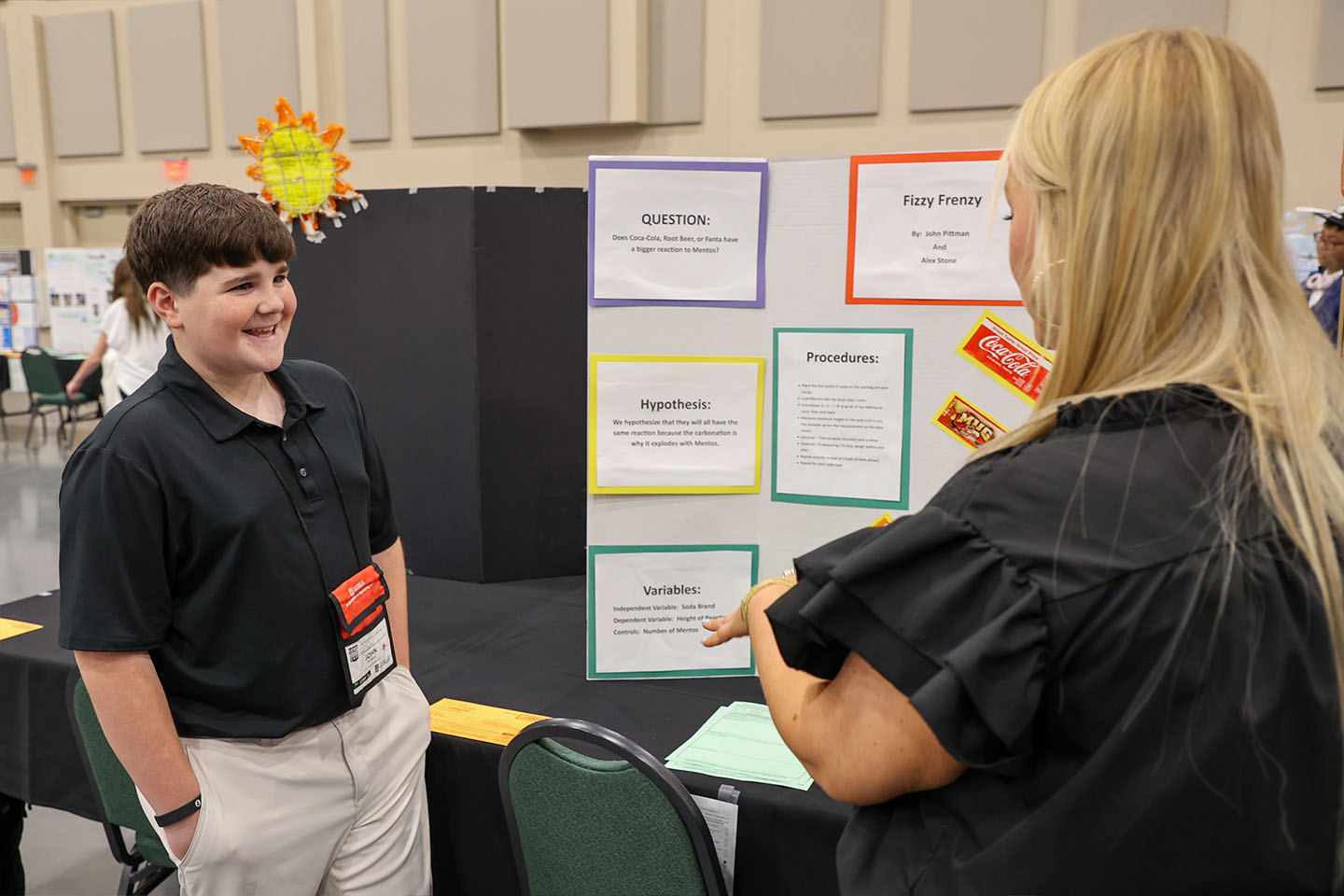
Many of her students have never experienced large-scale academic research or visited a college campus before attending the event.
“We’re here to show these kids what’s out there,” she said. “The more I can help them make baby steps toward attaining that for themselves, the better. But more than that, I want them to get out of our town and go to a college, and this is a great opportunity to expose them to that.”
Building confidence and skills
During the fair, students do more than display projects. They develop invaluable skills that will shape their futures. From public speaking to scientific communication, GSEF challenges participants to think critically and articulate their ideas to professional audiences.
A senior at the Gwinnett School of Mathematics, Science, and Technology, Ariana McDermott said the experience helped her grow as a communicator.
“I feel like that’s imperative to my future as I want to go into a field where I’ll be able to do research and communicate my findings,” she said. “Being able to have this experience is really helpful for me.”
A culture of service and outreach
At its core, GSEF is also an extension of public service. Faculty, industry professionals and volunteers donate their time to mentor students, evaluate projects and provide meaningful feedback – an experience that is impactful for many students, especially those who might not otherwise have access to these opportunities.
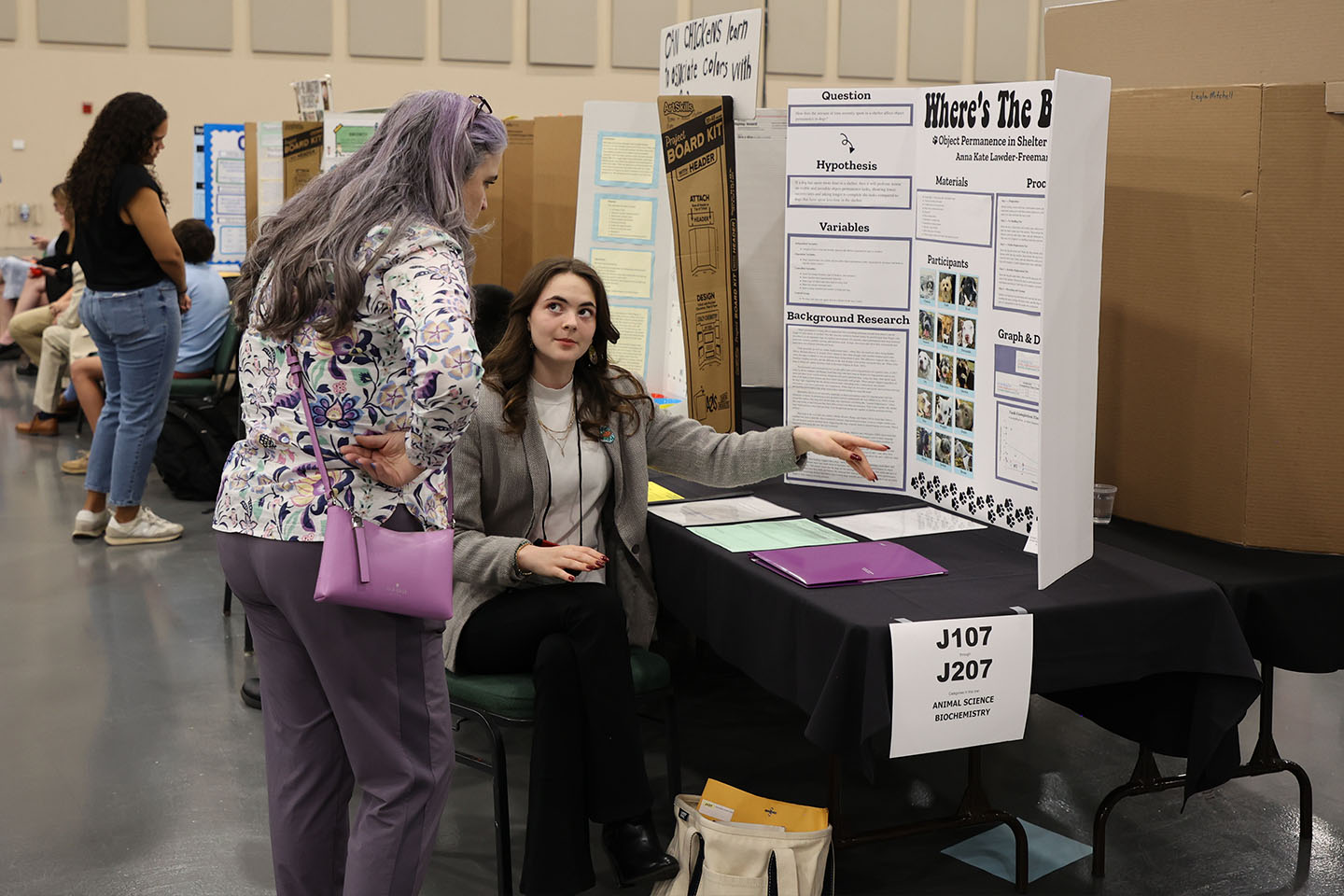
“UGA’s support of GSEF reflects our deep commitment to facilitating high-quality academic enrichment opportunities for young people across the state,” said GSEF Director Laura Brewer. The event allows students to envision themselves as academic and industry professionals. “The entire science fair process opens pathways for students to explore their interests and grow their research and communication skills. We’ve seen that this type of outreach has a lasting impact.”
Creating pathways to the future
The fair continues to serve as a cornerstone of UGA’s outreach efforts by connecting students, educators and professionals. Through programs like GSEF, UGA extends its land-grant and sea-grant mission beyond campus, with support from industry partners like Hyundai Motor Group and Rivian strengthening the impact.
Results for the 78th annual Georgia Science and Engineering Fair can be found online.